Why Do Gums Bleed Around a Fixed Retainer?
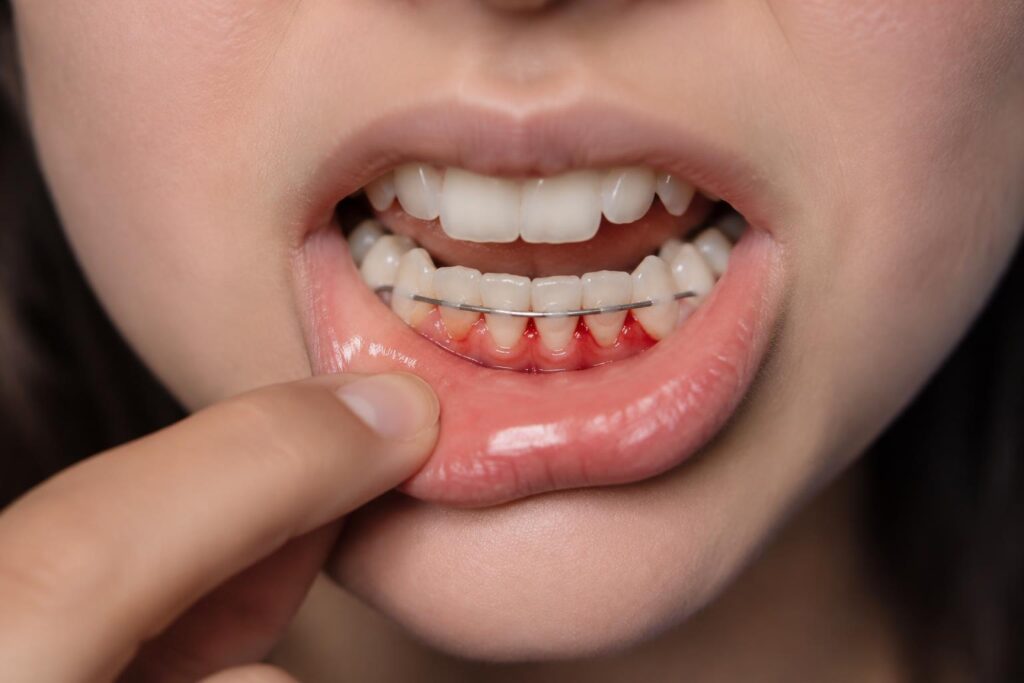
A dental hygienist in Forest Hill can help patients who notice bleeding gums around a fixed orthodontic retainer. These thin wires are usually attached behind the front teeth after braces or clear aligner treatment. They help prevent teeth from moving, but they can also create areas where plaque collects.
Some people notice bleeding when brushing or trying to floss beneath the wire. Others experience swollen gums, bad breath or hard deposits around the retainer.
Although bleeding is common, it should not be ignored. Understanding the cause can help patients protect their gums and maintain their straight teeth.
Why Do Gums Bleed Around a Permanent Retainer?
Bleeding gums around a permanent retainer are often linked to plaque-related inflammation.
Plaque is a sticky layer of bacteria that forms on teeth throughout the day.
If it is not removed, bacteria can irritate the gums and cause gingivitis.
Fixed retainers may make cleaning more difficult because the wire and bonding material create extra surfaces.
Common causes of bleeding include:
- Plaque collecting near the gumline
- Difficulty cleaning beneath the wire
- Hardened tartar deposits
- Gum inflammation
- Cleaning too aggressively
- A damaged or loose retainer
However, not every case of bleeding is caused by the retainer.
Some medical conditions and medicines can also affect gum bleeding.
Persistent symptoms should be assessed by a dental professional.
How Does Plaque Collect Behind Bonded Retainers?
Plaque behind a bonded retainer can be difficult to remove with an ordinary toothbrush.
A fixed retainer is commonly attached to several front teeth using tooth-coloured composite material.
The wire sits close to the inner tooth surfaces, creating small spaces that require careful cleaning.
Food particles and bacterial deposits may become trapped around the bonding points.
The lower front teeth can be particularly prone to tartar because they are close to salivary gland openings.
Saliva contains minerals that may harden plaque into tartar when deposits remain on the teeth.
Once tartar forms, ordinary brushing cannot remove it.
Professional cleaning is needed to remove hardened deposits safely.
Can a Dental Hygienist in Forest Hill Clean Around Fixed Retainers?
A dental hygienist in Forest Hill can assess gum health and remove plaque or tartar around a fixed retainer.
Professional cleaning may involve ultrasonic instruments, hand scalers and polishing.
The hygienist will choose suitable instruments based on the retainer’s position, condition and the deposits present.
An appointment may include:
- Checking the gums for inflammation
- Assessing plaque and tartar levels
- Examining the retainer for visible problems
- Removing deposits from accessible surfaces
- Demonstrating suitable cleaning techniques
- Recommending follow-up care
The aim is to clean the area without placing unnecessary pressure on the bonded wire.
If the retainer appears damaged or loose, the hygienist may recommend a dentist’s assessment.
Can Tartar Cause Bleeding Around a Retainer?
Tartar is hardened plaque that attaches to tooth surfaces.
It often has a rough texture, which can make it easier for fresh plaque to accumulate.
When bacteria remain near the gumline, the surrounding tissue may become inflamed.
This can lead to:
- Redness
- Swelling
- Bleeding when brushing
- Tenderness
- Bad breath
However, tartar does not always cause noticeable symptoms.
Some patients have significant deposits without pain.
Others experience bleeding even when only a small amount of plaque is present.
A dental assessment can determine whether the symptoms are consistent with gingivitis or a more advanced gum problem.
Can Professional Cleaning Damage a Fixed Retainer?
Professional hygiene treatment can usually be carried out around a secure bonded retainer.
However, care is needed when cleaning close to the wire and its attachment points.
A dental hygienist should examine the area before using instruments.
If a retainer is already loose, cleaning may need to be adapted until the dentist has assessed it.
Patients should also avoid trying to remove tartar themselves.
Using sharp household objects can damage the gums, teeth or bonding material.
If you notice that part of the wire has detached, contact your dental practice.
A damaged retainer can affect tooth stability and create additional areas where food and plaque collect.
How Should You Floss Around a Permanent Retainer?
Ordinary dental floss can be difficult to pass between teeth connected by a fixed wire.
However, several cleaning tools may help.
Floss Threaders
A floss threader allows dental floss to pass beneath the retainer.
The floss can then be moved gently between the teeth.
Super Floss
Some floss products have a stiffened end designed for cleaning around orthodontic appliances.
These can make threading easier.
Interdental Brushes
Small interdental brushes may be suitable for certain spaces.
The correct size is important because forcing a brush through a narrow gap can injure the gums or place pressure on the retainer.
Water Flossers
Water flossers may help some patients remove loose debris and reduce plaque around difficult areas.
However, they should not automatically replace other cleaning tools.
A dental hygienist can demonstrate a suitable routine for the individual retainer design.
Does Bleeding Mean You Should Stop Flossing?
Patients sometimes stop flossing because their gums bleed.
However, avoiding interdental cleaning may allow more plaque to accumulate.
If the bleeding is related to gingivitis, careful daily cleaning can help reduce inflammation over time.
The key is to use a gentle and effective technique.
Do not force floss against the gums or pull hard on the retainer wire.
If bleeding persists despite improved cleaning, arrange a dental assessment.
Heavy bleeding, unexplained bleeding or bleeding associated with other symptoms may require medical advice.
When Should You Visit a Dental Hygienist in Forest Hill?
A dental hygienist in Forest Hill can provide preventive care when plaque or tartar accumulates around a retainer.
However, there is no single appointment interval suitable for everyone.
Patients who develop tartar quickly may need more frequent professional cleaning.
Others may maintain healthy gums with longer gaps between appointments.
The recommended schedule depends on:
- Current gum health
- Previous gum disease
- Plaque and tartar levels
- Home cleaning habits
- Smoking status
- General medical history
- Retainer design and condition
The dental team can recommend an interval based on individual needs.
A hygiene appointment should not be delayed if persistent bleeding or swelling develops.
Can Bleeding Gums Be a Sign of Periodontal Disease?
Bleeding can be an early sign of gingivitis, which is inflammation of the gums.
Gingivitis is often reversible with improved plaque control and professional care where needed.
However, some patients develop periodontitis.
This is a more serious form of gum disease that damages the supporting tissues and bone around the teeth.
Possible warning signs include:
- Persistent gum bleeding
- Receding gums
- Loose teeth
- New gaps between teeth
- Persistent bad breath
- Changes in the bite
A fixed retainer can sometimes make changes in tooth position harder to notice.
Patients with these symptoms should arrange a dental assessment.
Professional periodontal treatment may be needed if gum disease has progressed.
What if the Retainer Wire Feels Loose?
A fixed retainer should remain securely bonded to the teeth.
If part of the wire becomes detached, it may no longer hold the teeth in their intended positions.
A loose section can also irritate the tongue or gums.
Patients should avoid pulling, bending or attempting to glue the wire themselves.
Contact the dental practice that fitted the retainer or another suitably qualified dentist.
Depending on the damage, the retainer may need to be repaired or replaced.
Professional cleaning can help with plaque removal, but it cannot repair a broken orthodontic attachment.
Can a Fixed Retainer Cause Bad Breath?
A fixed retainer does not necessarily cause bad breath.
However, plaque and food debris can collect around it if cleaning is difficult.
Bacteria in these deposits may produce unpleasant smells.
Gum inflammation can also contribute.
Other possible causes of bad breath include:
- Tongue coating
- Dry mouth
- Tooth decay
- Gum disease
- Certain medical conditions
Professional cleaning may help when bacterial deposits around the retainer are contributing to the problem.
However, persistent bad breath should be assessed rather than attributed only to the wire.
How Can You Prevent Gum Problems After Invisalign or Braces?
Orthodontic treatment can improve tooth alignment, but maintaining gum health remains essential.
A fixed retainer needs ongoing care even years after the original treatment ends.
Useful habits include:
- Brushing twice daily with fluoride toothpaste
- Cleaning beneath and around the wire every day
- Using appropriately sized interdental tools
- Avoiding aggressive brushing
- Checking for loose bonding
- Attending regular dental appointments
- Reporting persistent bleeding promptly
Retainers are often intended for long-term use.
Developing a practical cleaning routine can help patients protect their teeth and gums throughout this period.
What Happens During a Hygiene Appointment?
At London Dental Arts, dental hygiene appointments focus on preventive care and supporting healthier gums.
A hygienist may assess plaque, tartar and signs of gum inflammation.
The appointment can include professional cleaning and advice about cleaning techniques.
Patients with fixed retainers should mention:
- Where bleeding occurs
- How often they clean around the wire
- Whether the retainer feels secure
- Any changes in gum appearance
- Whether food regularly becomes trapped
This information helps the hygienist identify areas requiring extra attention.
If the gums show signs of more advanced disease, further periodontal assessment may be recommended.
Final Thoughts
Bleeding gums around a fixed retainer often develop when plaque collects near the wire and gumline.
Although the retainer helps maintain tooth alignment, it can make brushing and flossing more challenging.
A dental hygienist in Forest Hill can assess gum health, remove suitable deposits and recommend cleaning techniques for bonded retainers.
Persistent bleeding should not be ignored, particularly when it occurs alongside swelling, recession or loose teeth.
For more information, visit Dental Hygienist at London Dental Arts.
Patients in Forest Hill, Dulwich and nearby South East London areas can arrange a hygiene appointment to discuss bleeding gums, plaque build-up and care around permanent retainers.